
Patterned thinning
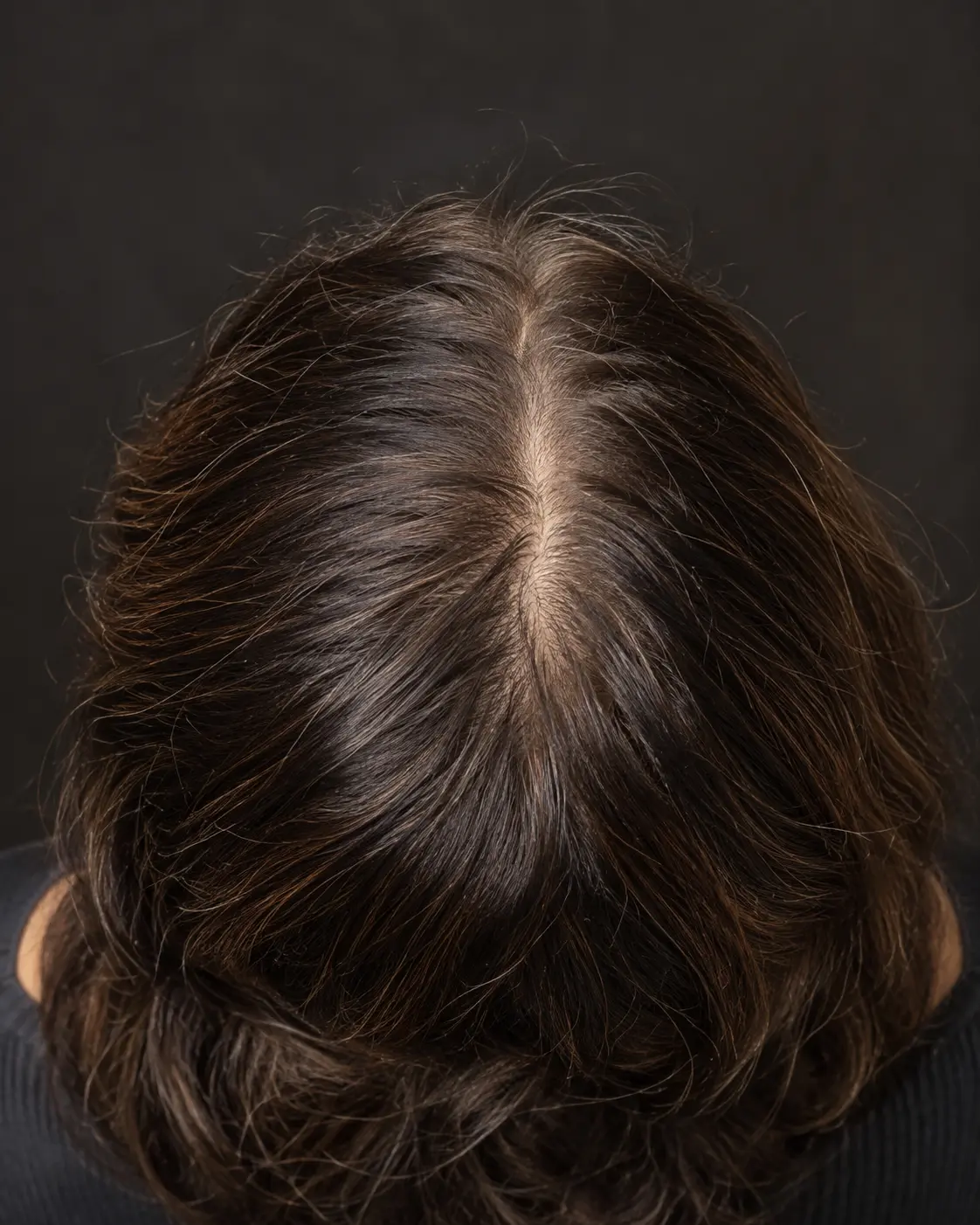
A widening part, reduced density, or gradual recession calls for evaluation of pattern, duration, family history, and follicle viability.
Document the patternHair restoration / Henderson, Nevada
PRP and PRF hair restoration begin with your own blood. A useful plan begins earlier, by identifying the pattern, establishing a repeatable baseline, and deciding whether this category fits the cause of your thinning.
The distinction worth keeping / 01
Hair loss is a description, not one condition. PRP or PRF may be considered for some patterns of thinning, but the same procedure is not the answer to every cause. The shape, speed, symptoms, and history of the change determine what should happen next.
A widening part, reduced density, or gradual recession calls for evaluation of pattern, duration, family history, and follicle viability.
Document the patternA noticeable increase in shedding can follow illness, stress, pregnancy, weight change, medication changes, or other medical factors.
Look for the triggerSmooth patches or sharply localized loss may represent a different process than common patterned thinning and deserve a diagnosis before an elective procedure.
Do not treat the labelPain, burning, itch, scale, redness, pustules, or loss of visible follicle openings can change the urgency and the appropriate specialist.
Refer before injectingRead the evidence / 02
Randomized trials and systematic reviews suggest PRP may improve hair density in androgenetic alopecia. They do not establish one universal preparation, dose, schedule, or result. PRF uses a different processing approach and has less hair-specific evidence.
Across controlled studies, PRP has shown a signal for improved hair density in some people with androgenetic alopecia.
Studies differ in blood processing, platelet concentration, activation, injected volume, session interval, comparison method, and follow-up.
A shared blood source does not make the preparations identical. Each method needs its own explanation, evidence, and rationale.
Diagnosis, follicle viability, age, health, concurrent care, and treatment method can all affect what is possible.
Ask for the evidence that matches your pattern and the exact preparation being proposed, not the category name alone.
The growth record / 03
Hair can appear different because of light, part width, camera distance, moisture, styling, color, or product. A later photograph only means something when the conditions are close enough to the baseline to support comparison.
Repeat the same line and tension through the hair.
Repeat head angle, camera angle, distance, and crop.
Keep direction, intensity, background, and exposure stable.
Record whether hair is clean, dry, colored, and product-free.
Compare at a clinically meaningful time, not day to day.
Note shedding, medications, illness, and concurrent treatment.
Same scalp.
Same conditions.
Useful comparison.
The standard of care / 04
Timeline, shedding, symptoms, family history, health changes, medications, prior treatment, and goals.
Pattern, scalp condition, visible follicle openings, density distribution, and areas of concern.
Whether PRP or PRF is a reasonable option, an adjunct, or not the right next step.
A controlled baseline and a defined reassessment point before treatment momentum takes over.
KayDee Shiraishi, DNP, APRN, FNP-C, is a doctorally prepared, board-certified family nurse practitioner with more than eight years in aesthetic medicine. Her work centers on anatomy, proportion, movement, and restraint. An unclear pattern, suspected disease, or signs of inflammatory or scarring hair loss can require medical workup or specialist evaluation before elective treatment.
Eight questions worth asking / 05
What pattern or cause of hair loss do you believe this is, and what supports that conclusion?
Why are you recommending PRP or PRF for this pattern rather than another option or referral?
What exact preparation method and device will you use, and what does its clearance cover?
Which parts of the proposed plan come from published evidence, and which depend on clinical judgment?
How will my baseline photographs be standardized so future comparisons are credible?
What will count as a meaningful response, and when will we evaluate it?
What happens if I do not respond or my shedding continues?
Which symptoms or scalp findings would make you pause treatment and refer me?
Concise answers / FAQ
PRP and PRF are platelet-containing preparations made from a patient’s own blood. The blood is processed, and the resulting preparation is placed into selected areas of the scalp. Preparation methods and final composition vary. These treatments may be considered as part of a plan for certain forms of thinning, but they do not diagnose the cause of hair loss or guarantee new growth.
No. Both begin with a blood draw, but their processing methods and resulting materials differ. PRF typically retains a fibrin matrix, while PRP is a liquid platelet-rich preparation. Hair-specific research is much more developed for PRP than for PRF, so evidence for one should not be presented as proof for the other.
Candidacy depends on the pattern and cause of hair loss, the condition of the scalp, medical history, medications, expectations, and whether viable follicles remain. Gradual patterned thinning may lead to a different discussion than sudden shedding, smooth patches, pain, scale, redness, or scarring. A clinical evaluation comes before a treatment choice.
No treatment can responsibly promise that. Research suggests PRP may improve hair density in some people with androgenetic alopecia, but study protocols vary and evidence certainty remains limited. Response is individual, and areas with permanently lost or scarred follicles may not respond like areas with miniaturizing follicles.
There is no universal series that fits every person. Published studies use different preparation methods, session counts, intervals, and follow-up periods. KayDee first evaluates candidacy and establishes a repeatable baseline. If treatment is appropriate, the plan and reassessment interval are individualized.
A useful comparison controls the variables that can make hair appear fuller or thinner. Photographs should repeat the part, angle, distance, light, hair condition, and styling. The response should be judged at an appropriate interval against that baseline, not from memory or a differently styled photograph.
Many clients prefer that their aesthetic care remain private. KayDee respects that preference and does not treat clinical photography as automatic promotional content. A photograph also cannot determine what is appropriate for your anatomy, movement, history, or goals. Those decisions belong in an individual consultation.
Before treatment / 06
PRP and PRF begin with your own blood, but collection, processing, and scalp injections are still medical procedures. The indication, preparation system, sterile technique, injection plan, and follow-up all matter.
Blood draw and scalp injection can involve pain, tenderness, bleeding, bruising, swelling, headache, and temporary discomfort. Infection is possible whenever the skin barrier is crossed. Report severe, worsening, or unexpected symptoms promptly.
Share your complete medical history, medications and supplements, bleeding or platelet disorders, anemia history, allergies, active infection, pregnancy status, prior scalp procedures, and current hair-loss treatments. The clinician determines what changes candidacy or timing.
No. Microneedling is a separate procedure and should not be implied by the terms PRP or PRF. The FDA states that it has not cleared microneedling devices for hair loss or for use with platelet-rich plasma. Ask exactly how the preparation will be delivered.
No. Spin method, collection tube, anticoagulant, platelet recovery, cellular composition, activation, and handling can change the final preparation. Ask for the name of the system and why that method is being used for your proposed treatment.
Private by design / Henderson, Nevada
Your appointment is reserved in KayDee's private boutique studio, one client at a time. The purpose is not to sell a fixed series. It is to understand the change you are seeing, decide whether PRP or PRF belongs in the conversation, and define how any response will be evaluated.
Consultation fee. The full amount is applied toward a product or service when you move forward.
Educational information only, not medical advice. Consultation does not guarantee treatment or results. PRP and PRF preparation methods, evidence, candidacy, risks, and individual response vary. Availability is confirmed during consultation. KayDee should clinically review the final treatment language, aftercare, scope, and emergency plan before publication.